
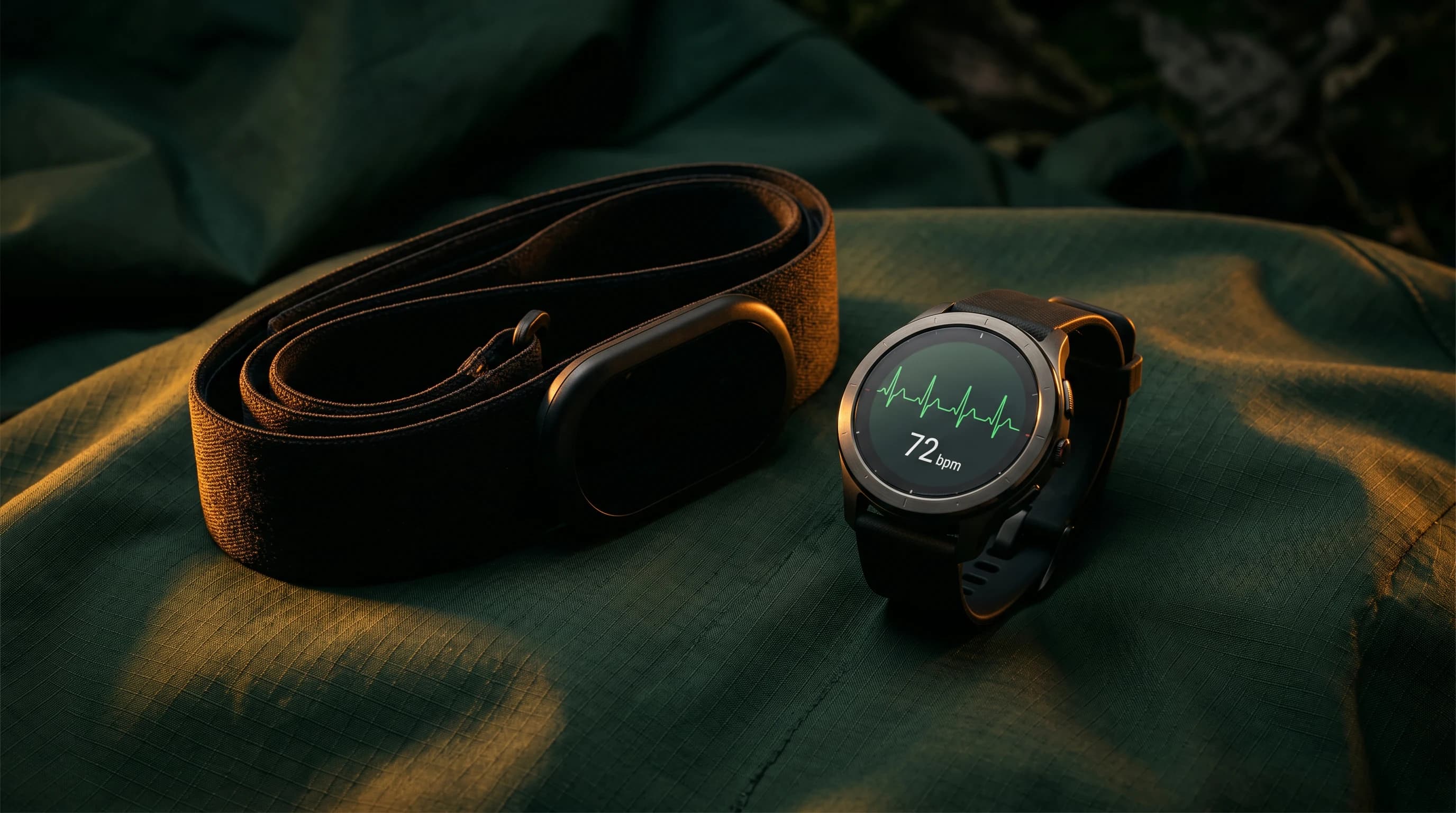
The wrist HR problem
Optical wrist sensors work by shining LEDs through the skin and reading the reflection. The signal degrades whenever:
- Skin tone is darker
- Wrist hair is dense
- The watch slides during movement
- Blood pools (cold hands, vasodilation, cuff pressure)
- HR climbs past 150 bpm
The result: zone 2 (where most aerobic adaptations happen) reads 10–15 bpm too high. Zone 5 (where you build VO₂max) reads 15–25 bpm too low. The two zones you actually care about are the two zones the wrist gets wrong.
What a chest strap actually measures
An electrical signal directly off the heart, the same way an ECG does. No optics, no signal processing guesswork. Accurate to ±1 bpm, instant response to changes, works at any intensity.
For interval training and zone-2 cardio, this is the difference between programming you can trust and programming that is mostly fiction.
What to buy
Two solid options:
- Polar H10 — gold standard. Bluetooth and ANT+. Battery user-replaceable. ~$90.
- Garmin HRM-Pro Plus — best if you live in the Garmin ecosystem. Stores runs/activities even offline. ~$130.
Skip arm-band HR sensors. They are better than wrist but still less accurate than chest.
How to use it
Wear it for any session where zone matters:
- Zone-2 cardio (60–90 min easy effort)
- Interval work (4 × 4 min hard / 3 min recovery)
- Threshold runs
- Anything where the program prescribes a specific HR
You do not need it for casual walks or strength training. The wrist is fine for those.
Why this matters
You can train hard and still get nothing because the wrist sensor put you in the wrong zone the whole time. A $90 strap solves it permanently. There are very few interventions in fitness with this kind of ROI.
Steady wins, especially when the data is honest.