
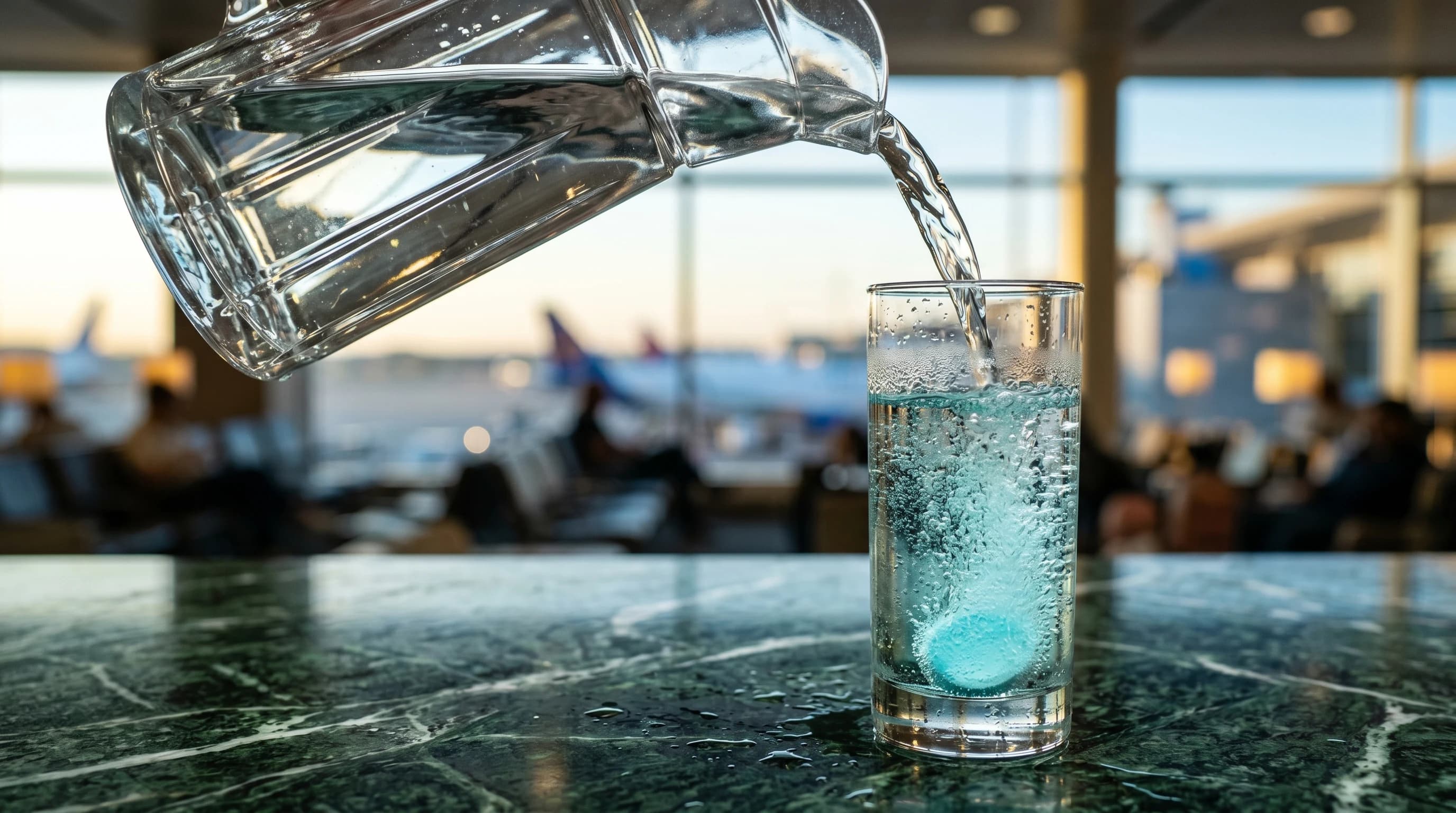
The travel deficit
Cabin air sits at 10–20% humidity. You lose ~250ml of water per hour just breathing. Add coffee, salt-light meals and a few glasses of wine, and you land mildly dehydrated, mineral-depleted and cortisol-elevated.
The classic response is to chug water. That makes the problem worse — you dilute remaining electrolytes and pee them out faster.
The right response is electrolytes.
The protocol
For each travel day:
- Morning — 1 sachet electrolytes (1000mg sodium, 200mg potassium, 60mg magnesium) in 500ml water
- In-flight — 1 sachet per 4 hours of flight time, sipped slowly
- On arrival — 1 sachet plus 500ml plain water, before the first coffee at destination
That is roughly 2–4 grams of sodium across the day. For a typical traveller, this is replenishment, not loading.
What to avoid
- Electrolyte drinks with 30g+ of sugar — you do not need the glucose, and the osmotic load will make it worse
- Pure water in volume — dilution without minerals
- Coffee before electrolytes — caffeine pulls magnesium out before you have put it in
Why this matters
The performance hit from travel is real and measurable. HRV drops 15–25% the day after a long-haul flight. Sleep latency increases. Cortisol stays elevated for 36–72 hours.
Electrolytes will not fix the time zone, but they will compress the recovery window from four days to two. For anyone who travels for work, that is the difference between a productive trip and a survival trip.
Steady wins, even at altitude.