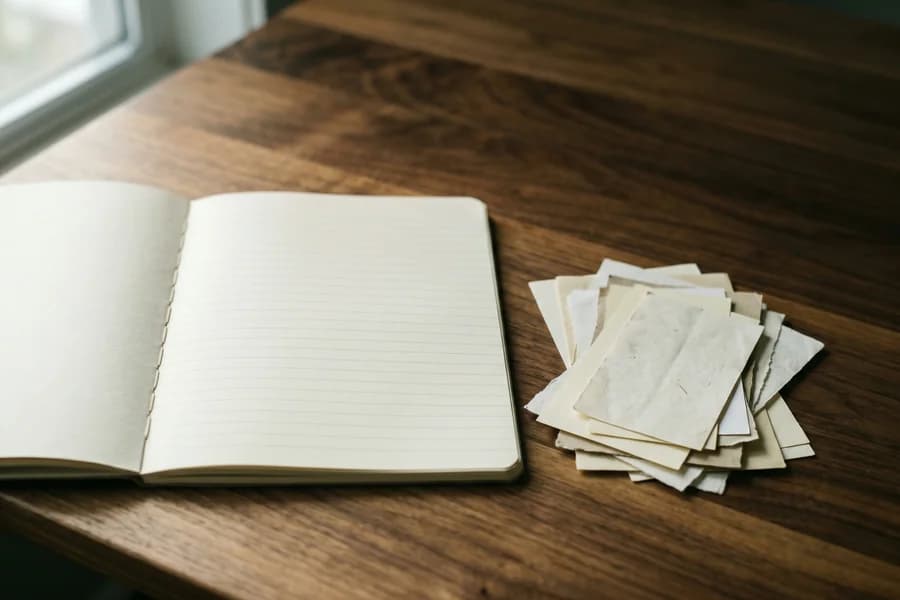
The most sustainable daily note workflow treats each day's note as a landing pad—a dedicated, low-friction surface where every stray thought, link, meeting note, and task first touches down before being sorted, connected, or discarded.
The Inbox Problem in Note-Taking
Most personal knowledge systems fail not because of poor organization, but because they lack a consistent entry point. Ideas arrive throughout the day—during calls, while reading, in the shower—and without a single, predictable place to put them, they scatter across browser tabs, text files, messaging apps, and notebooks. The result is fragmentation: you know you captured something valuable, but can't remember where.
The daily note solves this by answering a simple question: where does this go right now? The answer is always the same: today's note. Not a specific project folder, not a carefully named permanent note, not a todo list buried three levels deep. Just today.
This pattern works because it removes decision fatigue at the moment of capture. When you're in a meeting and someone mentions a useful resource, you don't pause to consider taxonomy. You drop it in the daily note. When you wake up with a project idea, it goes in the daily note. The capture inbox becomes implicit—it's wherever today is.
What we see in effective systems is a clean separation between capture and organization. The daily note handles capture. Everything else—synthesis, linking, task scheduling—happens later, in a separate mode, with separate attention.
Building a Sustainable Workflow
A working daily note workflow has three phases, each with different energy requirements:
Capture happens continuously throughout the day with minimal friction. Open today's note and add a bullet. No formatting, no categorizing, no second-guessing. The goal is speed and completeness, not structure.
Triage happens once daily, usually at day's end or the following morning. Scan yesterday's entries and process each one:
- Tasks move to your task system or calendar
- Ideas worth developing become their own notes and get linked
- Meeting notes get filed or connected to project notes
- Ephemera gets deleted
This is where note triage becomes essential—the daily sweep that prevents your system from becoming a write-only archive.
Review happens weekly or monthly. Scan recent daily notes for patterns, recurring themes, or ideas that have gained weight over time. These often surface connections you missed during daily triage.
The daily note is not a journal—it's a processing queue that resets every 24 hours.
The discipline is simple: capture everything in one place, then process it before it accumulates. This creates a rhythm that matches how attention actually works—rapid collection when ideas are fresh, deliberate organization when you have space to think.
How LIFE Helps
The LIFE notes module treats the daily note as a first-class primitive. Each day automatically gets a fresh surface, timestamped and ready. Captured items can be triaged with AI assistance—tasks are extracted and routed, ideas are enriched with context, and connections to existing notes are suggested. The module also surfaces unprocessed items from recent daily notes, ensuring nothing stagnates. → Start free with LIFE.
FAQ
What should go in a daily note versus a dedicated note?
Everything starts in the daily note during capture. Later, during triage, anything that needs permanence or will be referenced multiple times gets promoted to its own note. The daily note is temporary by design—a staging area, not an archive.
How far back should I keep daily notes?
Keep all of them, but only actively process the most recent. Older daily notes become a searchable archive of what you were thinking about on specific dates, useful when reconstructing timelines or understanding how ideas evolved.
What if I miss a day or fall behind on triage?
The system is forgiving. If you skip triage, items simply age in place until you catch up. The pattern still works—you always know where today's thoughts go, and you process the backlog when you can. Consistency matters more than perfection.
Related Reading
Steady wins.