
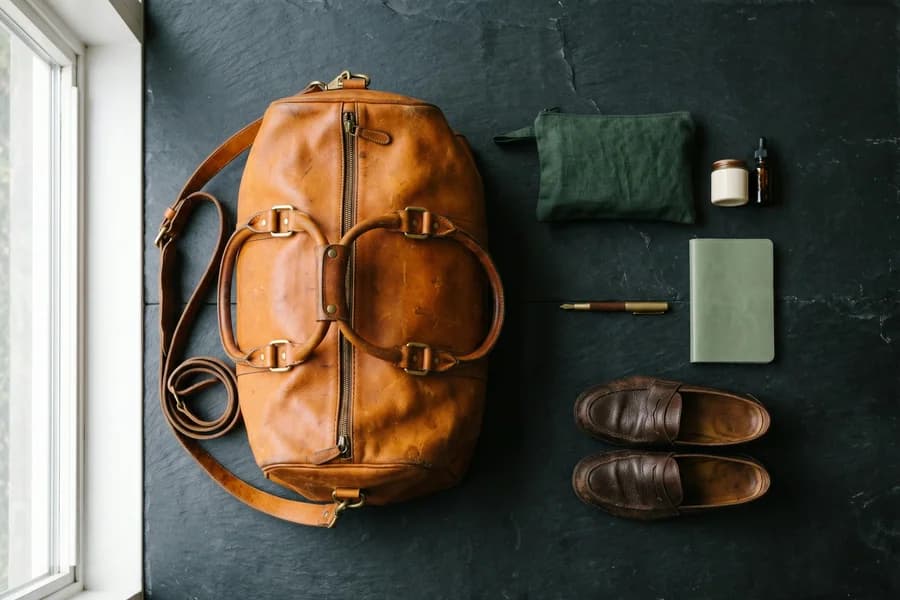
Traveling with one bag—a single carry-on that holds everything you need—forces clarity about what matters and eliminates the friction that turns most trips into logistics puzzles. The practice isn't about deprivation; it's about building a system that makes movement effortless.
The Cost of Carrying Excess
Most travelers pack for anxiety, not for the trip. The checked bag exists as insurance against imagined scenarios: the unexpected formal dinner, the sudden cold snap, the possibility that laundry might be inconvenient. Each "just in case" item adds weight, but more importantly, it multiplies decision points and failure modes.
Checked luggage creates dependencies. You wait at carousels. You worry about connections. You pay fees that compound across multi-leg journeys. You schlep bags up stairs in European hotels without elevators. The weight itself becomes a tax on spontaneity—you can't easily grab a coffee when changing trains, can't take the stairs instead of waiting for the elevator, can't walk the extra fifteen minutes to see a neighborhood.
The pattern repeats: travelers who check bags spend more time managing possessions and less time present in the place they traveled to experience. The bag becomes the trip's protagonist. One bag travel inverts this. When everything you own for the next week fits overhead, your attention shifts from luggage management to the environment around you.
Building the One-Bag System
The discipline begins with a hard constraint: choose a bag sized to meet airline carry-on limits, typically 45 linear inches. That container is absolute. Everything must fit, or it doesn't come.
Start with the immovable objects. Medications, documents, devices, chargers. Then add clothing using a simple formula: pack for three days, regardless of trip length. Three shirts, three underwear, two pants, one jacket. You'll wash clothes. Every traveler has access to a sink.
The tactical choices that make this work:
- Merino wool or synthetic fabrics that dry overnight and resist odor
- Packing cubes that compress and create internal structure
- Shoes that serve multiple contexts—one pair worn, one pair packed maximum
- Toiletries decanted into small containers, or plan to buy on arrival and discard before departure
Test your system on a weekend trip before committing to longer travel. The gaps reveal themselves quickly. What you didn't miss, you didn't need. What caused genuine friction gets addressed or accepted as a trade-off worth making.
Pair this physical discipline with thoughtful planning. An AI travel planner can surface logistics constraints that inform what you actually need to pack, rather than what anxiety suggests you might need.
One bag travel is not minimalism as aesthetic—it's minimalism as operational advantage.
How LIFE Helps
The LIFE travel module maintains your core packing template and tracks what you actually used on each trip. Over time, the system identifies patterns: items you always pack but never use, gaps that created friction, clothing that performed across contexts. The module integrates with your itinerary to flag specific needs—a swim requirement, a formal event, extreme weather—and suggests additions only when justified by planned activities. → Start free with LIFE.
FAQ
What if I need something I didn't pack?
You buy it, use it, and either bring it home in place of something else or leave it behind. This happens rarely, costs less than checked bag fees across a year of travel, and teaches you what you actually need versus what anxiety suggested you might.
Can one bag work for business travel?
Yes, with clothing that bridges contexts. A merino polo works in meetings and at dinner. Slim chinos pass in most business-casual environments. A packable blazer transforms an outfit. The key is choosing items that serve multiple scenarios rather than packing dedicated outfits for each.
How do you handle gifts or purchases during the trip?
Ship items home, wear new clothing and pack old items, or apply the one-in-one-out rule. The constraint is clarifying—you evaluate whether a purchase is worth displacing something you chose carefully before departure.
Related Reading
Steady wins.